1. Choose a difficulty
Kids uses four-letter answers. Default, Advanced and Expert use five-letter answers with increasingly demanding vocabulary and patterns.
Start with the level that makes the reasoning interesting rather than exhausting. You can change difficulty later without relearning the color system.
2. You have six guesses
Each row is one accepted guess. Use early rows to gather enough information to form a pattern, then switch from broad testing to realistic answer candidates before the final rows disappear.
A wrong guess is not wasted if it eliminates useful letters or positions. The goal is not to be right immediately; it is to make every row reduce uncertainty.
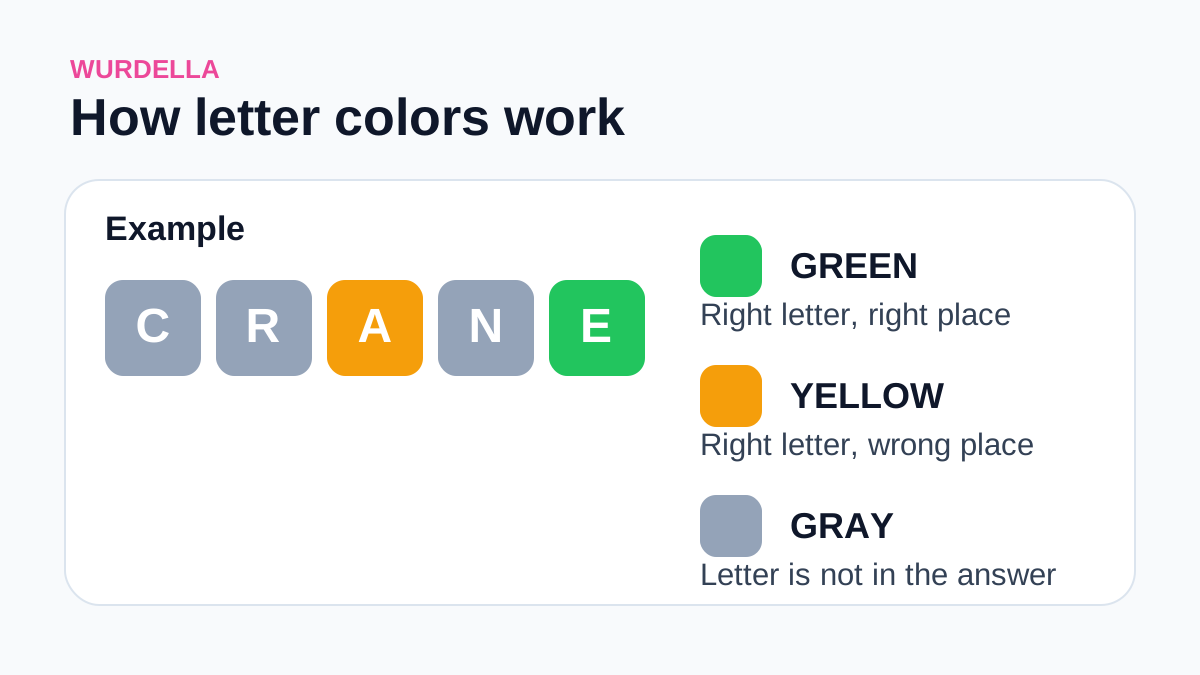
3. Green means right letter, right position
A green tile confirms both the character and its exact position. Keep it fixed in later answer candidates unless you are deliberately using a legal probe for information.
Multiple greens create a word frame, and that frame should quickly become more important than generic letter-frequency advice.
4. Yellow means right letter, wrong position
A yellow tile confirms that the letter appears in the answer but cannot remain in the tested position. If the same letter becomes yellow in two positions, both positions are now unavailable.
Strong players track rejected positions as carefully as they track the letter itself.
5. Incorrect letters are usually out
An incorrect tile normally means the letter does not belong in the answer. Reusing it without a reason wastes a position that could test something new.
The important exception is duplicate-letter feedback. When a guess contains multiple copies, one copy can be positive while another is incorrect because the answer contains fewer copies than the guess.
6. Read repeated letters as quantity information
Two copies of the same guessed letter must be interpreted together. One green or yellow plus one incorrect copy often means the answer contains only one instance; two positive copies support duplication.
Do not assume every answer has unique letters, and do not test duplicates early unless the pattern gives you a reason.
7. The clue is available only during the early rows
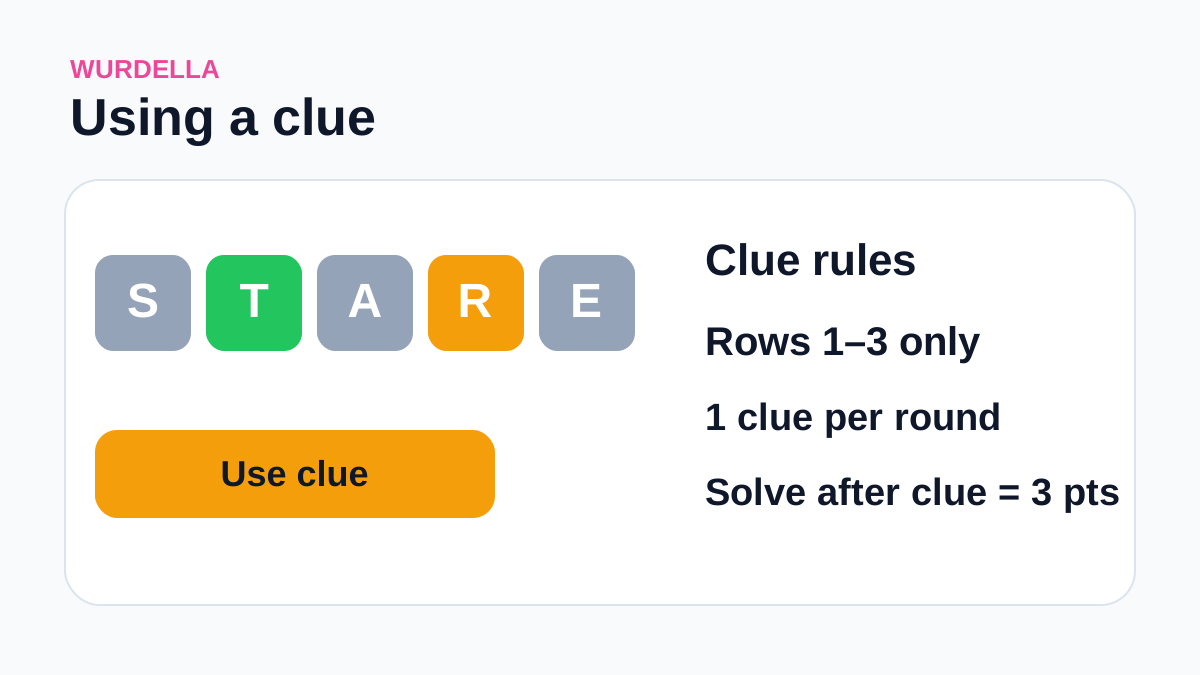
Wurdella offers one clue during rows 1–3. The clue can narrow meaning or vocabulary, but it reduces the score available from a solved round.
Use it when the board still allows several realistic answers and the clue will actually change the candidate list. Skip it when the answer is already strongly implied by the tiles.
8. Regular play is unlimited
Finishing one regular board does not end the session. Start another round, change difficulty or test a different strategy immediately.
Unlimited mode is the best place to compare openers or habits because several rounds tell you more than one lucky result.
9. Daily is one shared puzzle
Wurdella Daily uses one date-based answer so players can compare the same challenge. The Daily clues page offers spoiler-light help and a rolling archive of previous answers.
Daily is separate from unlimited regular play, so completing the shared puzzle does not prevent you from starting more boards.
10. Local multiplayer is pass-and-play
Two to four named players can share one browser session and take turns in a local match. Set the target number of round wins before starting and keep the same difficulty for a fair comparison.
Across rounds, starter order should alternate so the match is not accidentally biased by whoever made the final guess in the previous word.
11. Challenge a Friend works on separate devices
Remote Challenge a Friend creates a server-backed room. One player shares the invite link or code and the other joins from another device.
This is the correct option when two players are not in the same place and want a synchronized head-to-head match rather than a screen-share workaround.
12. Team mode is about discussion
Two teams share the board and compete toward a match target. A strong team reads the evidence first and suggests complete words second.
Rotate the captain or typist so one experienced solver does not quietly become the entire team.
13. Verified accounts and public rankings
Guest play remains available, but public rankings are based on verified-account results. Guest statistics stay private to the device and are not counted as global leaderboard records.
This separation keeps the public scoreboard tied to account-backed results while preserving low-friction guest play.
14. A practical decision routine for every row
Before submitting, ask four questions: What must stay? What must move? What is impossible? What new information will this word give me if it is wrong?
That routine is more useful than memorizing one perfect starter because it adapts to the actual board in front of you.