How to set up a Wurdella team match
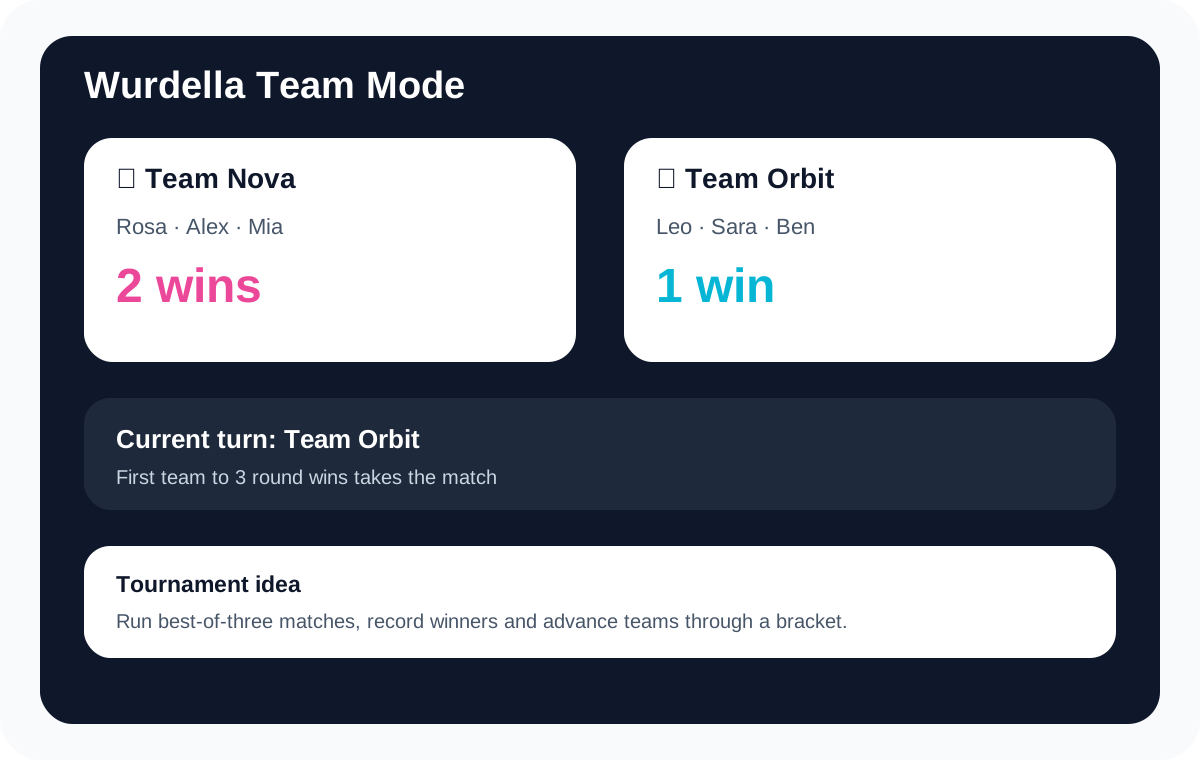
Create two teams, choose names and emojis, add members, select the difficulty and set the number of round wins needed to take the match. A short first-to-three game works well for most groups; longer formats are better when teams are evenly matched and want a fuller contest.
Decide the discussion rule before round one. Thirty seconds of open discussion followed by one captain summarizing the final choice is simple, fair and much easier to manage than everyone typing or calling out at once.
Use an evidence-first discussion routine
A productive team turn has two phases. First, read the board: fixed greens, required yellows, rejected positions and excluded letters. Second, generate complete candidate words that satisfy those constraints.
Separating evidence from candidates prevents a confident but impossible word from dominating the conversation. It also gives quieter players a clear role because they can contribute one verified fact even when they do not have the final answer.
- ✓ Name the fixed positions
- ✓ List the required letters
- ✓ Say where yellows cannot go
- ✓ Remove excluded letters
- ✓ Only then compare complete guesses
Rotate the captain so one player does not solve every round
The easiest way for team mode to become boring is to let one experienced solver control every guess. Rotate the captain, typist or explanation role after each round so the group remains a team instead of an audience.
In a family game, pair an adult with a child and let the child own one part of the board logic. In a classroom, distribute confident readers across teams instead of allowing self-selected groups to stack all of the strongest solvers together.
Keep clue use fair between teams
Both teams should play under the same clue rule. If clues are allowed, keep the clue information with the active team and remember that using help changes the scoring value of the round.
A useful team rule is to require the group to explain what the board already proves before using the clue. That keeps the feature as a strategic rescue instead of the automatic first response to uncertainty.
Classroom team formats that fit inside a lesson
For a seven-minute warm-up, project one board, give both teams thirty seconds of silent thinking and then allow a short discussion window. Ask the active team to explain why its chosen word fits the evidence before it is submitted.
For vocabulary practice, finish the round by defining the answer or using it in a sentence. One short language task is enough; the game works best when the lesson value is attached to the puzzle instead of replacing it.
Workplace and remote-team formats
A first-to-three match can work as a Friday activity or meeting warm-up if participation is optional and the time limit is clear. Rotate the spokesperson so the same extroverted colleague does not become the permanent solver.
For distributed teams, one shared host board over screen share is still the simplest group setup because Team mode itself is designed around one team game state. Separate-device Challenge a Friend is best for head-to-head remote play instead of a many-person team room.
Tournament ideas for several teams
With four or more teams, use short first-to-two or first-to-three matches in a round robin or knockout bracket. Publish the difficulty, match target and tie-break rule before play begins so every group faces the same conditions.
For a school or workplace tournament, record match wins first and use a secondary measure such as total Wurdella points only if you need a tie-breaker. Do not invent the tie-break after seeing the standings.
Common team-play mistakes
The most common problems are predictable: one person dominates, teams suggest words before reading the board, clue information leaks to the opposition or the organizer changes the match format halfway through. All of them are easier to prevent than repair.
A thirty-second evidence routine, rotating captain and fixed rules solve most of the problem without making the game bureaucratic.